Children can be affected by bed bugs somewhat differently than adults, given both physiological and behavioral factors.
It helps to separate two questions that usually get merged. Whether children are bitten more is largely a matter of exposure and sleeping arrangements rather than anything physiological. Whether a given child reacts more visibly is an immune response question that varies enormously between individuals of any age. The more useful third question, and the one that actually changes household decisions, is what the knock-on effects of an active infestation look like in a child’s daily life.
- Bite reaction severity varies individually in children, similar to adults — no universal rule of greater severity.
- Sleep disruption from an active infestation can meaningfully affect children’s school performance and behavior.
- Prompt treatment is particularly valuable for households with children given this potential disruption.
- Age-appropriate, non-alarming communication helps children cope with the situation.
Bite Reaction Considerations
Some children show more pronounced visible bite reactions than adults, though this varies individually the same way adult reactions vary — there’s no universal rule that children are always more affected [1].
Bed bug bite reactions are a delayed sensitivity response that develops with repeated exposure rather than an immediate reaction on first contact. A person bitten for the first time often shows nothing at all, and a meaningful share of people never develop a visible reaction even with ongoing exposure. This cuts both ways in a household with children. A child with dramatic welts is not necessarily being bitten more than a sibling in the same room who shows nothing, and an absence of marks on anyone is not evidence that the room is clear.
The complication that genuinely does show up more in children is secondary skin infection from scratching, since younger children are less able to leave bites alone [2]. Broken skin that becomes increasingly red, warm, swollen, or starts weeping is worth a call to a clinician, and that is true for any age. It is also worth saying plainly that bed bugs are not established as transmitters of disease to humans, so the concern is the bite reaction, the scratching, and the disruption rather than infection risk from the insect itself.
Sleep Disruption and Behavioral Impact
An active infestation’s sleep disruption and associated anxiety can affect children’s daytime functioning (school performance, behavior) meaningfully, making prompt treatment particularly valuable for households with children.
The mechanism here is not exotic. Repeated waking, itching through the night, and reluctance to go to bed all reduce total sleep, and reduced sleep shows up in children as irritability, difficulty concentrating, and behaviour changes rather than as a complaint about being tired. Parents often notice a school or nursery report before they notice an insect, which is one reason an unexplained behavioural change alongside unexplained skin marks is worth taking seriously as a pair.
Anxiety about the bed itself can outlast the insects, and it is worth planning for. Children who have connected their bedroom to being bitten sometimes resist returning to it after treatment has finished. Being able to show a child a sealed encasement and clean interceptors, and explaining in plain terms that the problem is being handled, gives that reassurance something concrete to attach to. Moving the child to a sofa or a parent’s bed is understandable, but it tends to spread the problem into a second room rather than solve it [3].

Practical Family Considerations
Involve children age-appropriately in understanding the situation without excessive alarm, and prioritize prompt treatment given the potential for meaningful disruption to their sleep and daily functioning.
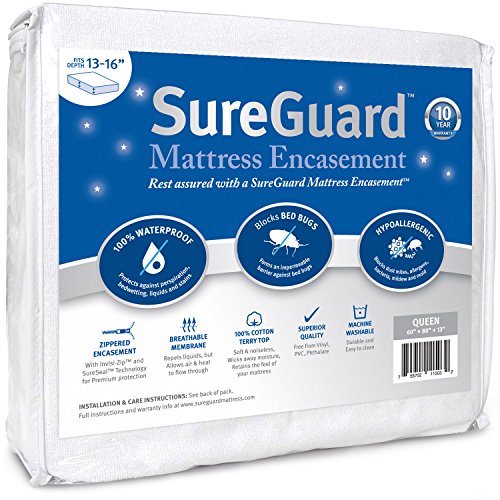
Encasements do more work in a child’s room than anywhere else in the house, because they are entirely non-chemical, permanent, and remove the single largest harborage area from the equation [4]. Leave them on rather than treating them as a temporary measure, since bed bugs can survive a long time without feeding and the point of the encasement is to outlast them. Interceptors under every bed leg then do the ongoing detection work without anything being applied to a surface a child sleeps on.
Soft toys and bedding are the other high-contact category, and heat handles them well. A household dryer on high heat for roughly thirty minutes kills all life stages including eggs, which makes laundering the most child-appropriate control available. Items that cannot go through a dryer can be sealed in a bag and set aside, though that takes a long time to be reliable and works better as a holding measure than as a treatment.

Reducing Chemical Exposure in a Child’s Room
The genuine hazard in a household with children is frequently not the insects but the response to them. Pesticide misuse rises sharply during bed bug infestations, and the pattern is consistent: products applied far beyond label rates, products intended for outdoor or agricultural use brought indoors, and applications made directly to sleeping surfaces that no label permits. Children are more exposed to any of this than adults, because they spend more hours in bed and more time in contact with floors and soft furnishings.
The practical rule is to read the label as the binding instruction rather than the marketing, and to check specifically whether a product is permitted on mattresses, on upholstered furniture, and in occupied rooms. Many effective residual products are labelled only for cracks, crevices, and frame voids, not for broadcast application across a bedroom. Respecting that restriction costs nothing in effectiveness, because those cracks and voids are where the insects actually spend most of their time.
Building the plan around non-chemical controls first is worth doing on its own merits in a child’s room, not only for safety. Encasements, interceptors, heat laundering, decluttering the area around the bed, and pulling the bed frame slightly clear of the wall are all measures that work regardless of insecticide resistance, and every one of them keeps working while chemical treatments are being repeated on their own schedule.
FAQ
Are children always more affected by bed bug bites than adults?
Not universally — individual reaction severity varies the same way it does in adults, though sleep disruption’s impact on daily functioning is a particular consideration for children.
My child has bites but nobody else in the house does. Does that mean only their room has bed bugs?
Not necessarily. Reaction varies so widely between individuals that one person showing marks while others show none is common even when everyone is being bitten. Treat the distribution of marks as a hint about where to inspect first, not as a map of the infestation, and use interceptors in every sleeping area to get evidence that does not depend on anyone’s skin.
Are bed bugs dangerous to a child’s health beyond the bites?
Bed bugs are not established as transmitters of disease to humans. The realistic concerns are the bite reaction itself, secondary skin infection from persistent scratching, and the effects of disrupted sleep. Very heavy, prolonged infestations have been linked to low iron in isolated case reports, but that is rare and not the typical situation.
Should I throw away my child’s mattress and soft toys?
Usually no on the mattress. A labelled bite-proof encasement seals in anything present and costs far less than replacement, and a new mattress in an untreated room simply gets colonised again. Most soft toys can be run through a hot dryer cycle instead of being discarded, which is both cheaper and much easier to explain to the child.
This is general information about typical patterns, not a guarantee of any specific child’s reaction — consult a pediatrician for specific concerns.
References
- How to Find Bed Bugs. U.S. Environmental Protection Agency
- Bed Bugs are Public Health Pests. U.S. Environmental Protection Agency
- Bed Bugs. National Pesticide Information Center (Oregon State University / U.S. EPA)
- Top Ten Tips to Prevent or Control Bed Bugs. U.S. Environmental Protection Agency
These statements have not been evaluated by the Food and Drug Administration. This information is not intended to diagnose, treat, cure, or prevent any disease. Content is for informational purposes only and is not medical advice; consult a qualified healthcare provider before starting any supplement. As an Amazon Associate we earn from qualifying purchases.