DIY treatment costs vary significantly by pest type and confirmed infestation extent.
- Bed bug DIY treatment runs $50-$300 depending on tools, meaningfully less than professional treatment.
- Termite DIY monitoring/spot-treatment runs $30-$140; full professional barrier treatment runs $1,000-$3,000+.
- DIY makes the most sense for early detection and limited confirmed activity.
- Failed DIY attempts can add cost and delay if professional treatment becomes necessary anyway afterward.
Bed Bug DIY Costs
A basic DIY kit (traps, spray, mattress encasement) typically runs $50-$150; a steam cleaner adds $50-$150 more if not already owned — meaningfully less than professional treatment for a limited, early-caught infestation.
Where the money actually goes
The headline kit price is rarely the whole DIY spend, because bed bug treatment is as much a laundry and containment exercise as a chemical one. Mattress and box spring encasements are usually needed for every bed in an affected room and have to stay on long term. Interceptor traps go under every leg of every bed and seat, which is more units than most people budget for. Rutgers extension puts a one-bedroom apartment at roughly 8–12 traps, at a few dollars each.[1] Then there is the recurring cost of hot-washing and high-heat drying bedding and clothing through the treatment period.
- Encasements for each mattress and box spring in the affected rooms.
- Interceptor traps for every bed and upholstered furniture leg.
- Repeat product applications, since most sprays do not kill eggs.
- Laundry and high-heat drying costs across several weeks.
- Bags or bins for isolating treated items.
A steam cleaner is the one item worth thinking about separately. It is the largest single line in most DIY budgets, but it is also reusable and is one of the few consumer tools that acts on eggs as well as adults. If you already own one, DIY becomes considerably more viable.
Termite DIY Costs
DIY bait station systems run $30-$80 for a basic perimeter setup; spot-treatment termiticide products run $20-$60 — reasonable for monitoring or limited confirmed activity, though a full professional barrier treatment ($1,000-$3,000+) is often warranted for established infestations.
Monitoring is a realistic DIY goal; elimination usually is not
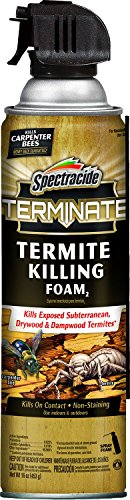
It helps to separate the two things a homeowner can spend money on here. Monitoring stakes and bait stations around a perimeter are genuinely useful and genuinely cheap, and they do the job they claim to do, which is to tell you whether subterranean termites are foraging near the structure.[2] Spot-treatment foams and termiticides also do what they claim, which is to kill termites in a specific accessible gallery you can reach.
Neither is the same as eliminating a colony. A full liquid barrier requires trenching and rodding around the foundation, often drilling through slabs and hardscape, and applying a large volume of correctly diluted product at a consistent depth. The volume and equipment involved are the reason this stays in professional territory, and the reason the cost gap between DIY and professional is so much wider for termites than for bed bugs.
When DIY Savings Make Sense vs. Don’t
DIY makes the most sense for early detection, monitoring, and limited confirmed activity; the savings gap narrows or reverses if DIY treatment fails and professional treatment becomes necessary anyway after wasted time and product cost.
Set a stopping rule before you start
The largest hidden cost in DIY treatment is the time spent discovering it did not work. Deciding in advance what failure looks like, and when you will call it, keeps that cost bounded. A reasonable rule for bed bugs is to treat continued live captures in interceptor traps after two full treatment cycles as a signal to bring in a professional. For termites, any evidence of active feeding that continues after spot treatment, or any sign of damage in a structural member, is the point to stop.
- Good DIY candidates: early, confirmed, and confined to one room or one accessible area.
- Poor DIY candidates: multiple rooms, shared walls, or any structural involvement.
- Set a review date before you buy anything.
- Keep receipts, since a professional will want to know what was already applied.

FAQ
Is DIY termite treatment cheaper than professional treatment overall?
For monitoring or very limited spot treatment, yes. For an established infestation, DIY often isn’t adequate, and professional treatment becomes necessary anyway, sometimes after wasted DIY cost and time.
Assess infestation extent honestly before choosing DIY — an established infestation of either pest often warrants professional treatment.
References
- Cost-Effective and Money-Wasting Bed Bug Control Methods (FS1251). Rutgers New Jersey Agricultural Experiment Station — Wang C, Cooper R
- Termite Control: Answers for Homeowners (ENTFACT-604). University of Kentucky College of Agriculture — Potter MF
These statements have not been evaluated by the Food and Drug Administration. This information is not intended to diagnose, treat, cure, or prevent any disease. Content is for informational purposes only and is not medical advice; consult a qualified healthcare provider before starting any supplement. As an Amazon Associate we earn from qualifying purchases.
