Dealing with bed bugs or termites can feel overwhelming, especially when you’re trying to figure out how much it will cost to handle the problem yourself versus hiring a professional. This guide breaks down typical price ranges for identification tools, treatment products, and professional services so you can make an informed decision based on your situation and budget.
Costs vary widely depending on the size of the infestation, the type of structure, and regional labor rates. The numbers below are averages drawn from industry surveys and retailer pricing; they are meant as starting points, not guarantees. Always factor in the possibility of repeat treatments or hidden damage when you calculate the total expense.
- DIY identification tools cost $10‑$60; professional inspections start around $100.
- Bed bug DIY product kits range from $100‑$600 for a full treatment cycle; professional whole‑house services run $500‑$5,000.
- Termite DIY liquid or bait systems cost $300‑$1,500 in materials; professional barrier or bait treatments range $1,200‑$4,000 plus ongoing monitoring fees.
- Hidden expenses — repeat treatments, furniture replacement, structural repairs — can double the initial outlay.
- Match the response to infestation severity: small, localized problems may be DIY‑manageable; widespread or structural issues usually require licensed professionals.
Why Understanding Costs Matters
Both bed bugs and termites can cause significant property damage and health concerns if left untreated, but the financial impact of each pest differs. Bed bugs primarily affect comfort and may require repeated treatments, while termites can compromise structural integrity, leading to costly repairs. Knowing the typical cost brackets for DIY and professional routes helps you allocate funds early and avoid surprise expenses later.
A realistic budget also lets you decide whether a DIY approach is feasible for the scope of the problem. Small, localized bed bug introductions are often manageable with consumer‑grade products, whereas widespread termite activity usually demands professional equipment and expertise. This guide outlines the price points for each step so you can match the response to the severity of the infestation.
DIY Identification Expenses
The first cost you’ll encounter is confirming the pest. For bed bugs, a basic flashlight, a magnifying glass, and a set of interceptor traps (typically $10‑$25 for a pack of four) are enough to detect live bugs and shed skins. A handheld UV light ($15‑$30) can help spot fecal spots on mattresses and furniture. For termites, a moisture meter ($20‑$40) and a simple wood probe ($5‑$15) let you check for hollowed wood and elevated moisture levels that indicate activity.
If you prefer a more definitive answer, mail‑in identification kits are available for $30‑$60 per sample. Before paying for one, note that EPA guidance is that a cooperative extension agent will identify a submitted sample at no cost to you.[1] These kits include vials, instructions, and a lab fee. While they add cost, they can prevent misidentification and unnecessary treatment purchases. Keep in mind that visual inspection alone may miss early‑stage termite colonies hidden behind walls.
DIY Bed Bug Treatment Product Ranges
Consumer‑grade bed bug control products fall into several categories. Mattress and box‑spring encasements cost $30‑$80 each and are essential for trapping existing bugs and preventing new ones from entering. Rutgers extension rates encasements as genuinely cost-effective and notes that serviceable vinyl versions sell for as little as $5–$10 each, though thin vinyl tears more easily than fabric-backed covers.[2] Insecticide dusts (e.g., silica‑based or pyrethroid dusts) run $15‑$35 per pound and are applied to cracks, crevices, and voids. Aerosol sprays labeled for bed bugs typically cost $10‑$25 per can and are used for spot treatments on furniture and baseboards. Weight this line lightly: Rutgers extension lists most consumer pesticide sprays and foggers under what does not work for bed bugs, so aerosols are best treated as a minor spot tool alongside encasements, traps, heat and laundering rather than as the core of a plan.[2]
Heat treatment kits — portable steam cleaners or heater units — range from $150 for a basic steam mop to $500‑$1,200 for a professional‑grade heater that can raise a room to 120°F. While heat can be effective, achieving uniform temperature throughout an entire room is difficult without commercial equipment. Budget for at least two treatment cycles spaced two weeks apart, plus the cost of laundering bedding and clothing at high heat.
DIY Termite Treatment Product Ranges
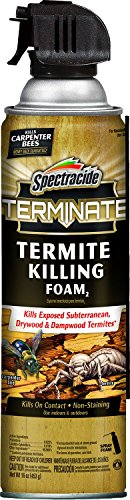
For termites, the most common DIY options are liquid termiticides, foam formulations, and bait stations. Concentrated liquid termiticide (usually a non‑repellent formulation) costs $40‑$120 per gallon; a typical perimeter treatment for a 2,000‑square‑foot home may require 5‑10 gallons, putting material costs between $200 and $1,200. Foam termiticides, useful for localized voids, are priced $25‑$45 per can and cover a few cubic feet each.
Consumer bait and monitoring stakes are sold in kits rather than singly: a 15‑stake kit with locator shields runs about $55‑$60, or roughly $4 per stake. A full perimeter of 15‑20 stakes therefore costs about $55‑$115 in hardware, plus replacement stakes as they are consumed. This is monitoring and spot‑kill hardware, not the professionally installed baiting systems quoted further down this page. DIY application of liquids or foams requires a sprayer or injection rod ($30‑$80) and personal protective equipment (gloves, goggles, respirator) adding $30‑$60 to the upfront cost. These figures are most useful for judging professional quotes rather than as a do-it-yourself plan: University of Kentucky extension guidance is that termite treatment is a job for professionals, and that retail DIY products will seldom eradicate an established infestation.[3]
Professional Service Pricing Overview
Professional bed bug inspections typically cost $100‑$300, with treatment packages ranging from $500 for a single‑room heat treatment to $2,500‑$5,000 for whole‑house chemical and heat combinations. Many companies charge per room or per linear foot of infested area, and follow‑up visits are often included in the initial quote. Warranty periods of 30‑90 days are common, but extended guarantees can add $200‑$500.
Termite professional services start with an inspection fee of $100‑$350. Conventional liquid barrier treatments for an average single‑family home run $1,200‑$3,500, while baiting systems may be quoted at $1,500‑$4,000 including installation and first‑year monitoring. Fumigation (tenting) for severe drywood termite infestations can exceed $5,000. Annual renewal contracts for monitoring and re‑treatment typically cost $300‑$600 per year.
Hidden Costs and Long‑Term Considerations
DIY projects often overlook recurring expenses. Bed bug encasements need replacement if torn, and insecticide dusts may require re‑application after vacuuming or cleaning. Heat treatments may demand professional equipment rental if the initial attempt fails, adding $200‑$400 per day. For termites, bait stations require cartridge changes and periodic inspection labor if you hire a technician for monitoring, which can add $150‑$300 annually.
Structural repairs are the largest hidden cost for termites. Even after successful treatment, damaged joists, sheathing, or flooring may need replacement, costing $2,000‑$10,000 depending on extent. Bed bug infestations can lead to furniture disposal ($100‑$500 per piece) and potential loss of rental income if a unit becomes uninhabitable. Factoring these possibilities into your budget prevents financial strain later.

FAQ
How much does a basic DIY bed bug kit cost?
A basic kit with encasements, interceptors, dust, and a spray typically costs $120‑$250. Adding a steam cleaner raises the total to $300‑$600.
When should I call a professional for termites?
If you see mud tubes on foundation walls, hollowed wood in multiple locations, or evidence of swarmers inside the home, a licensed termite specialist should evaluate the structure.
Are professional warranties worth the extra cost?
Warranties can provide peace of mind for 30‑90 days; extended warranties add $200‑$500 but may cover re‑treatment if the infestation recurs. Read the terms carefully before purchasing.
Can I treat termites myself with over‑the‑counter products?
Over‑the‑counter liquids and baits are available, but effective perimeter treatment requires proper trenching, dilution, and application technique. Mistakes can leave gaps that allow colonies to survive.
What hidden costs should I budget for after treatment?
Plan for possible furniture disposal, replacement of damaged wood, repeat chemical applications, and annual monitoring fees if you use a bait system.
Cost estimates vary by region, infestation size, and home construction; for extensive termite damage or recurring bed bug problems, consult a licensed pest control professional to assess structural safety and ensure complete eradication.
References
- Do-it-yourself Bed Bug Control. U.S. Environmental Protection Agency
- Cost-Effective and Money-Wasting Bed Bug Control Methods (FS1251). Rutgers New Jersey Agricultural Experiment Station — Wang C, Cooper R
- Termite Control: Answers for Homeowners (ENTFACT-604). University of Kentucky College of Agriculture — Potter MF
These statements have not been evaluated by the Food and Drug Administration. This information is not intended to diagnose, treat, cure, or prevent any disease. Content is for informational purposes only and is not medical advice; consult a qualified healthcare provider before starting any supplement. As an Amazon Associate we earn from qualifying purchases.
